Honey is one of the easiest foods to store — but there are a few key rules that make the difference between honey that stays perfect for years and honey that crystallizes into a rock or ferments. This guide covers exactly how to store honey, whether raw or opened, short-term or long-term, and what to do with crystallized honey.
How to Store Honey After Opening
Once you open a jar of honey, the main risk is moisture getting in. Here’s what to do: always seal the lid tightly after each use. Never use a wet spoon — water introduced into honey can trigger fermentation. Store at room temperature in your pantry or kitchen cupboard — away from heat sources like the stove, and away from direct sunlight. Opened honey stored this way will last indefinitely without any quality loss.
How to Store Raw Honey
Raw honey follows the same rules as regular honey but with one extra consideration: because raw honey is unfiltered and retains active enzymes, it crystallizes faster. This is completely normal and not a sign of spoilage. Store raw honey at room temperature (60–75°F / 15–24°C) in a glass jar with a tight lid. Do not refrigerate raw honey — cold temperatures significantly accelerate crystallization and can turn your honey rock-solid.
Best Containers for Storing Honey
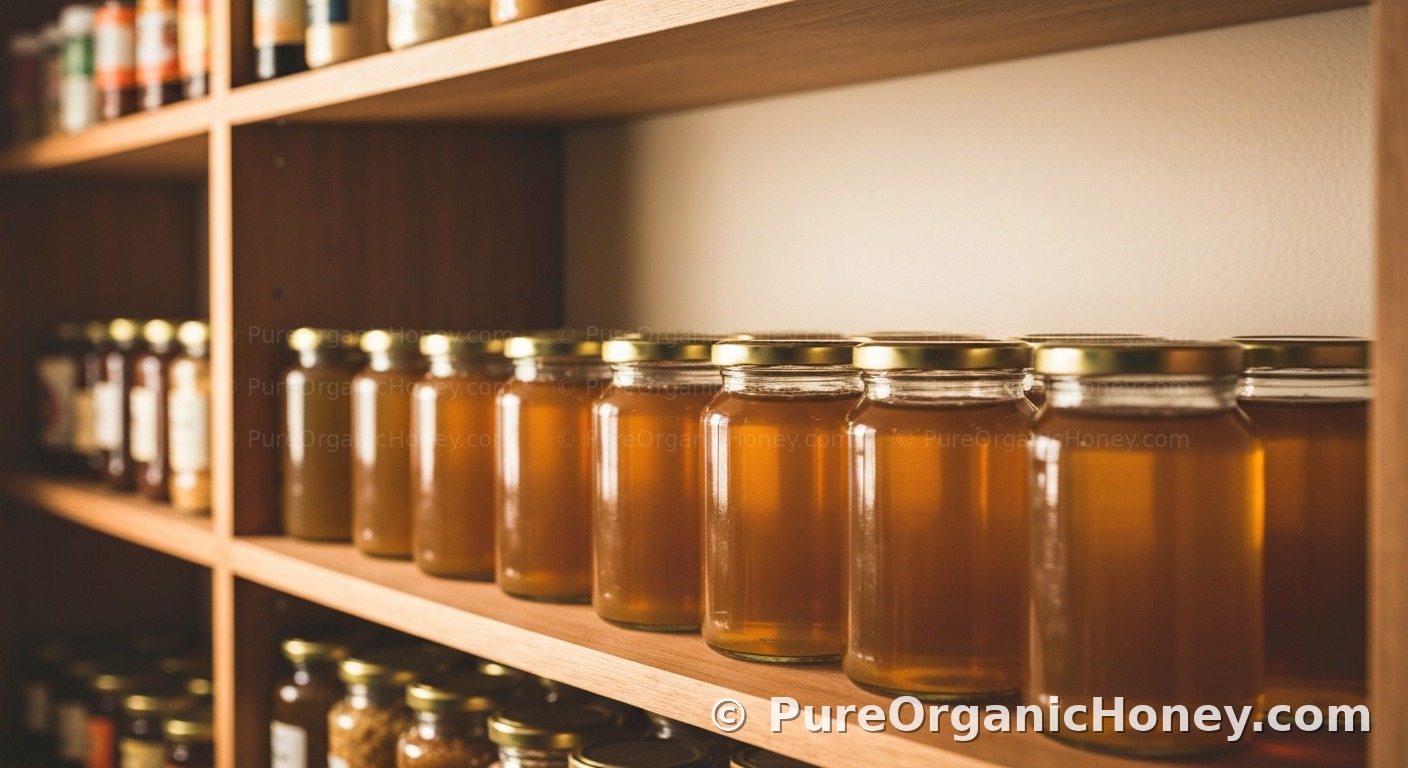
Glass jars are ideal — glass doesn’t absorb flavors, doesn’t react with honey’s acidity, and keeps moisture out. Food-grade BPA-free plastic also works for short-to-medium term storage. Avoid metal containers — honey’s natural acidity (pH 3.2–4.5) can react with metal over time, affecting flavor. Dark glass bottles protect against light degradation if you store honey for extended periods.
How to Store Honey Long Term
For long-term storage (years), the key factors are low moisture, sealed container, and stable cool temperature. Archaeologists have found 3,000-year-old honey in Egyptian tombs that was still edible — pure honey stored properly literally never spoils. For home long-term storage: keep in a sealed glass jar, store in a cool dark pantry or basement (55–65°F / 13–18°C is ideal), and avoid temperature swings. Freezing honey is an option for very long term storage — it won’t spoil, though texture may change slightly upon thawing.
You found an old jar of honey in the back of your pantry. It’s been there for years. The color looks darker, maybe there are some crystals at the bottom. Is it still safe to eat? Here’s the surprising answer: honey doesn’t expire. That’s not an exaggeration. Archaeologists have found 3,000-year-old honey in Egyptian tombs that was still perfectly edible.
Why Honey Never Spoils
Honey’s indefinite shelf life isn’t magic—it’s chemistry. Four natural properties work together to prevent spoilage permanently.
1. Low Moisture Content
Honey contains only about 17–18% water. Most bacteria and microorganisms need moisture to survive and multiply—honey is simply too dry for them to thrive. Bees actually fan the honeycomb with their wings to evaporate excess water from the nectar until it reaches this perfect, shelf-stable concentration.
2. High Sugar Content
Honey is approximately 80% sugar (glucose and fructose). This extremely high sugar concentration creates an osmotic environment where bacteria can’t survive—the sugar essentially pulls water out of any microorganism that tries to grow, killing it.
3. Acidic pH
Honey has a pH between 3.2 and 4.5—quite acidic. Most harmful bacteria prefer neutral environments and can’t survive in honey’s acidic conditions.
4. Natural Hydrogen Peroxide
When bees make honey, they add an enzyme called glucose oxidase. When honey contacts moisture, this enzyme produces small amounts of hydrogen peroxide—the same antiseptic you might use on a cut. This natural antibacterial defense system protects honey from contamination.
Why Does Honey Have a Best By Date?
If honey never spoils, why do jars have “best by” dates? The answer: legal requirements and quality standards, not safety. Most food products are required to display some form of date marking. For honey, the date indicates peak quality—color and flavor may mellow slightly over years—not spoilage. Your honey is safe to eat regardless of the date on the jar.
How to Store Honey Properly
Store at room temperature (ideal range 64–75°F / 18–24°C)—your kitchen pantry is perfect. Keep it dry—avoid storing near the stove or dishwasher where steam can introduce moisture. Avoid direct sunlight—light can darken honey and degrade beneficial compounds over time. Use clean, dry utensils—never double-dip or use wet spoons, as moisture can trigger fermentation. Don’t refrigerate—cold temperatures dramatically speed up crystallization. Store in glass or food-grade plastic—metal containers can cause oxidation.
What About Crystallized Honey?
That grainy, solid honey isn’t spoiled—it’s crystallized. Crystallization is a completely natural process where glucose separates from water and forms crystals. It’s 100% safe to eat. In fact, crystallization is often a sign of high-quality raw honey—heavily processed honey is heated specifically to delay crystallization, which also removes beneficial compounds.
To restore crystallized honey to liquid: place the jar in a bowl of warm water (around 100–110°F / 38–43°C), let sit 15–30 minutes, stir occasionally. Avoid microwaving—uneven heating creates hot spots that destroy beneficial enzymes.
Frequently Asked Questions
Can honey go bad at all?
Yes, in one specific way: if water gets into honey, it can ferment. This happens if you use wet utensils or store honey in a very humid environment. Fermented honey smells sour or alcoholic and should be discarded.
My honey turned darker. Is it bad?
Darkening is normal over time and just means some flavor compounds have changed slightly. The honey is perfectly safe—the flavor may be slightly more caramel-like.
Can I use honey that’s 10 years old?
Yes, assuming it was stored properly and shows no signs of fermentation. The flavor may have mellowed but it’s completely safe to consume.
Disclaimer: This article is for informational purposes only. While honey has an indefinite shelf life, never give honey to infants under 12 months due to botulism risk.