Most honey on supermarket shelves has been pasteurized. But walk into a farmers market or health food store, and you’ll find raw honey selling for twice the price. What’s the difference between raw vs pasteurized honey? Is one actually healthier? The truth is that pasteurization does change honey—and not always for the better.
What Is Raw Honey?
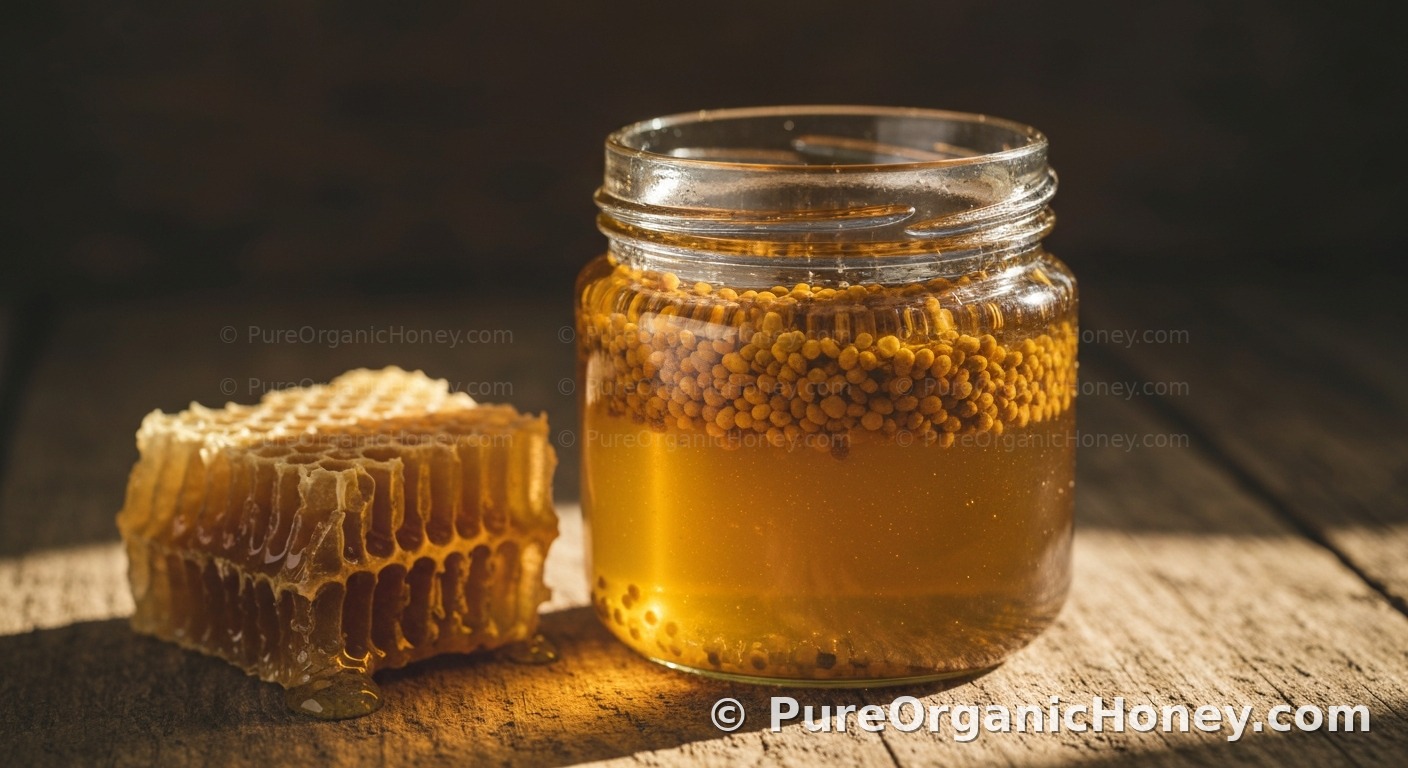
Raw honey is honey as bees make it—extracted from the hive and bottled with minimal processing. Beekeepers remove honeycomb frames, extract honey by centrifuge, strain out large debris, and bottle it. That’s it. Raw honey is never heated above natural hive temperatures (approximately 95°F / 35°C), preserving natural enzymes, bee pollen, propolis, antioxidants, and trace vitamins and minerals.
What Is Pasteurized Honey?
Pasteurized honey has been heated to 145–160°F (63–71°C) before bottling. This kills yeast cells (preventing fermentation), delays crystallization, creates a clear uniform appearance, and extends shelf stability. The result looks appealing on store shelves—but pasteurization destroys the active enzymes and reduces antioxidant content that make honey nutritionally valuable.
What Pasteurization Actually Destroys
Enzymes are the most significant loss. Raw honey contains glucose oxidase, diastase, and invertase—active enzymes that support digestion and produce antibacterial hydrogen peroxide. Temperatures above 104°F (40°C) begin destroying these enzymes. Pasteurization at 145°F+ eliminates them almost entirely.
Pollen is removed during the ultra-filtration that accompanies pasteurization. Without pollen, honey’s source becomes untraceable. Antioxidants including flavonoids and phenolic acids are partially degraded by heat—raw honey consistently shows higher antioxidant activity in comparative studies.
Raw vs Pasteurized: Side-by-Side
| Factor | Raw Honey | Pasteurized Honey |
|---|---|---|
| Enzymes | Fully intact | Largely destroyed |
| Pollen | Present | Removed |
| Antioxidants | Higher | Reduced |
| Appearance | Cloudy, thick | Clear, smooth |
| Crystallization | Occurs naturally | Significantly delayed |
| Shelf life | Indefinite | Indefinite |
| Safety | Same (avoid under 12 months) | Same |
Which Should You Choose?
For eating straight, health benefits, sore throats, skin care, or any medicinal use—choose raw honey. Its intact enzymes and antioxidants make a real difference. For cooking and baking where you’ll apply heat anyway, pasteurized honey works fine—you’ll be destroying the enzymes yourself during cooking regardless.
Frequently Asked Questions
Is pasteurized honey bad for you?
No, it’s not harmful—it’s just less beneficial than raw honey. Pasteurized honey is still a natural sweetener with some antioxidants; it’s just lost its active enzymes and some nutritional value.
Does pasteurization make honey safer?
Not really. Honey is naturally antibacterial and doesn’t harbor dangerous pathogens. Pasteurization is done for appearance and shelf stability, not safety. The botulism risk for infants applies to both raw and pasteurized honey equally.
Why does store honey never crystallize?
Commercial honey is pasteurized and ultra-filtered, removing the particles and pollen that seed crystallization. Some cheap commercial honey also contains added syrups that don’t crystallize.
Disclaimer: This article is for informational purposes only. Never give honey to children under 12 months. For medical conditions, consult a healthcare professional.