You bought a jar of honey labeled “100% pure.” But is it really? Studies suggest that a significant portion of honey sold worldwide is adulterated—mixed with cheap syrups or diluted with water. Learning how to tell if honey is pure or fake has become an essential skill for anyone who cares about what they eat. The good news? You don’t need a laboratory. A few simple home tests can tell you whether that golden jar is the real deal.
Why Fake Honey Is So Common
Honey is one of the most adulterated foods in the world. Real honey is expensive to produce—bees visit millions of flowers and beekeepers invest significant time and resources. Fake honey costs almost nothing to make. Common adulterants include high fructose corn syrup, rice syrup, sugar water, glucose solutions, and inverted sugar syrups. These additives mimic honey’s sweetness but lack its nutritional benefits, enzymes, and natural properties.
7 Home Tests to Check Honey Purity
1. The Thumb Test
Place a small drop of honey on your thumb. Pure honey stays in place or moves very slowly—it’s naturally thick and viscous. Fake honey spreads quickly or drips off because added water and syrups thin the consistency.
2. The Water Test
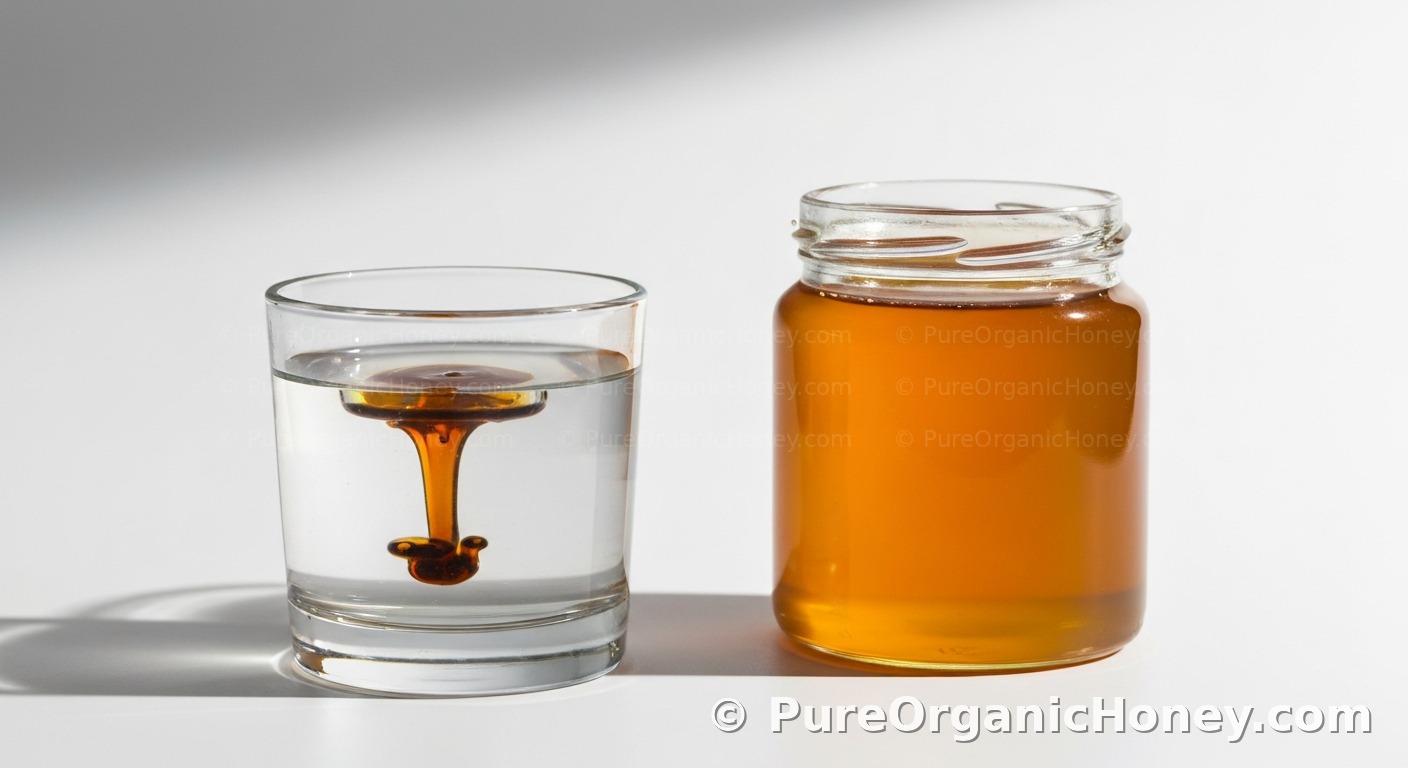
Add one tablespoon of honey to a glass of room-temperature water without stirring. Pure honey sinks to the bottom in a compact lump and dissolves slowly. Fake honey dissolves almost immediately because added sugars disperse quickly in water.
3. The Flame Test
Dip a dry matchstick in honey and try to light it. Pure honey has very low moisture content, allowing the match to ignite. Fake honey contains extra water that prevents ignition.
4. The Vinegar Test
Mix honey with a few drops of white vinegar in water. If the mixture foams or fizzes significantly, the honey may contain added chalk or other adulterants. Pure honey does not react with vinegar this way.
5. The Paper Test
Drop a small amount of honey on white paper. Pure honey should not soak through or leave a wet spot. Adulterated honey soaks through because of its higher water content.
6. The Crystallization Test
Real honey crystallizes naturally over time. If your honey has been sitting for months and remains perfectly clear and liquid, it may have been heavily processed or adulterated. Crystallization is a sign of quality—not spoilage.
7. Check for Bee Pollen
Pure honey contains bee pollen, visible as cloudiness or fine particles. Ultra-filtered honey has all pollen removed, making it unnaturally clear. Pollen is also what allows scientists to trace honey’s geographic origin—one reason some producers remove it.
Signs of Genuine Raw Honey
- Cloudy appearance with visible particles or fine sediment
- Crystallizes naturally within weeks to months
- Thick, slow-pouring consistency
- Complex aroma—floral, earthy, or slightly caramel
- Sourced from an identifiable beekeeper or certified brand
Red Flags to Watch For
- Perfectly clear, water-like transparency
- Stays liquid indefinitely without crystallizing
- Suspiciously low price compared to similar products
- No information about source, beekeeper, or country of origin
Where to Buy Real Honey
The safest sources are local beekeepers at farmers markets, specialty honey shops that vet their suppliers, and certified organic brands with third-party testing. Single-origin honey—where you know exactly which region it comes from—is much harder to fake than anonymous bulk commercial honey.
Frequently Asked Questions
Does real honey expire?
Real honey doesn’t spoil. Archaeologists have found 3,000-year-old honey in Egyptian tombs that was still edible. Store in a sealed container away from moisture and light and it lasts indefinitely.
Can I trust “100% Pure Honey” labels?
“100% pure” is not a regulated term in many countries. Look for USDA Organic certification, third-party lab testing, or direct sourcing from traceable producers.
Is crystallized honey bad?
No. Crystallization is completely natural and doesn’t affect safety or quality. Place the jar in warm water and stir to restore liquid form. Avoid microwaving—it destroys beneficial enzymes.
Disclaimer: This article is for informational purposes only. Home tests can indicate potential adulteration but are not substitutes for laboratory analysis.