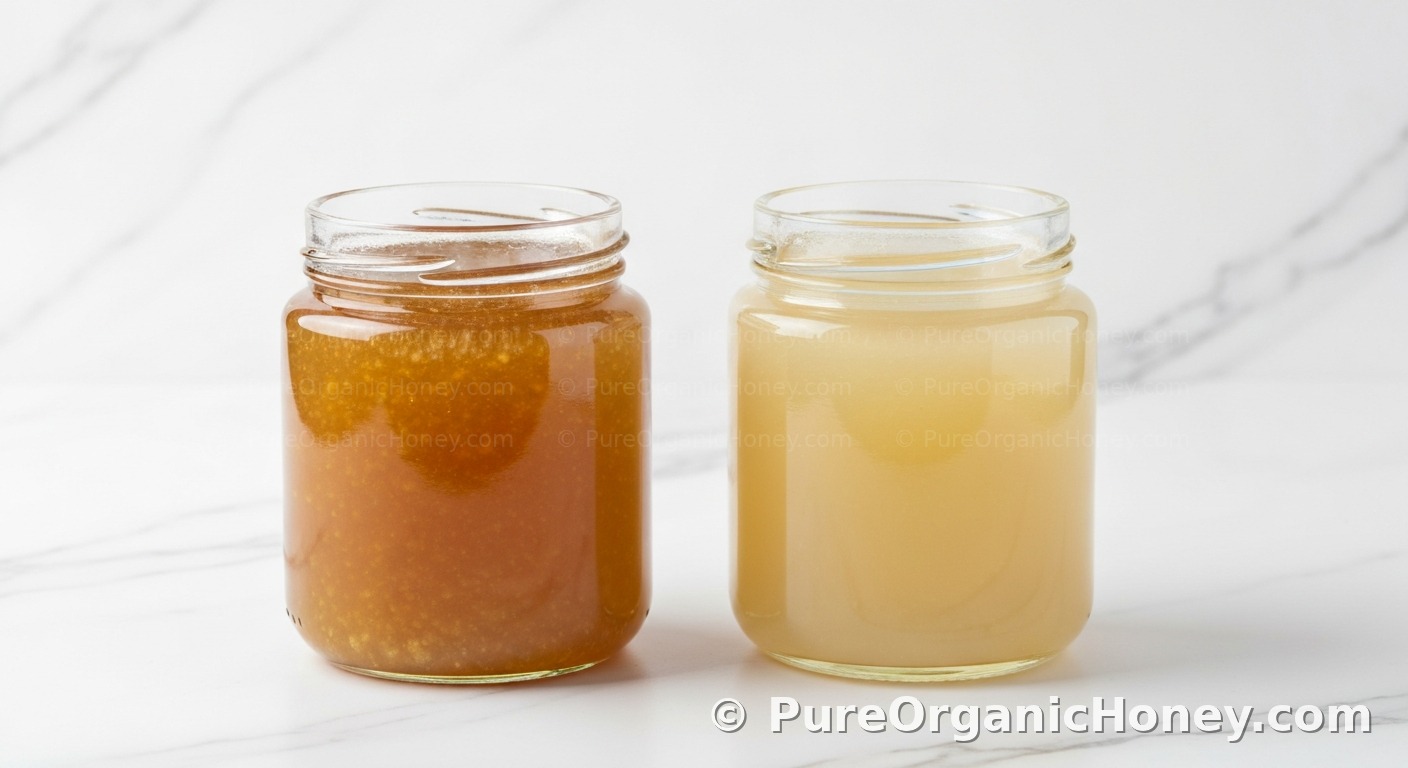
You’re standing in the grocery aisle, staring at two jars of honey. One says “raw.” The other just says “honey.” The raw one costs twice as much. Is it worth it? Understanding the difference between raw honey vs regular honey matters more than you might think—the way honey is processed affects its taste, nutritional value, health benefits, and authenticity.
What Is Raw Honey?
Raw honey is honey in its most natural form. When beekeepers harvest raw honey, they extract it from the honeycomb, strain out large debris like beeswax and bee parts, and bottle it. No heating. No heavy filtering. No processing. Raw honey retains natural enzymes (like glucose oxidase and diastase), bee pollen, propolis, antioxidants, vitamins, and minerals. It’s often cloudy, thicker, and crystallizes faster than processed honey.
What Is Regular Honey?
Regular honey—sometimes called commercial or processed honey—has been heated and filtered before bottling. The typical process involves heating to 145–160°F (63–71°C) to kill yeast cells and delay crystallization, ultra-filtration to remove pollen and air bubbles, blending from multiple sources for consistent flavor, then bottling. This creates a smooth, clear, uniform product with a long shelf life—but there’s a cost.
Key Differences: Raw vs Regular Honey
| Factor | Raw Honey | Regular Honey |
|---|---|---|
| Enzymes | Intact and active | Destroyed by heat |
| Pollen | Present | Removed by filtration |
| Antioxidants | Higher levels | Reduced levels |
| Appearance | Cloudy, thick | Clear, smooth |
| Crystallization | Faster (natural) | Slower (delayed) |
| Taste | Complex, varied | Mild, consistent |
| Price | Higher | Lower |
When Raw Honey Is Worth It
Choose raw honey if health benefits matter to you, if you use honey medicinally (sore throats, wound care, skin treatments), if you eat honey straight on toast or yogurt, or if authenticity matters. The presence of pollen and natural crystallization are signs of genuine, minimally processed product.
When Regular Honey Is Fine
Regular honey works perfectly for cooking and baking—you’ll apply heat anyway, which destroys enzymes regardless. It’s also appropriate when budget is a priority or when you need consistent flavor for recipes.
How to Identify Real Raw Honey
Not all honey labeled “raw” is genuinely raw—the term isn’t strictly regulated. Signs of genuine raw honey: cloudy appearance with visible particles, crystallizes within weeks or months, thick consistency that pours slowly, complex aroma. Red flags: perfectly clear appearance, stays liquid indefinitely, suspiciously low price, no information about source or beekeeper.
Frequently Asked Questions
Is raw honey safe to eat?
Yes, for most people. Raw honey is safe for healthy children over 12 months and adults. Never give any honey—raw or regular—to infants under 12 months due to botulism risk.
Does raw honey need to be refrigerated?
No. Honey is naturally shelf-stable due to its low moisture content and acidic pH. Store at room temperature in a sealed container. Refrigeration speeds up crystallization.
Is crystallized raw honey still good?
Absolutely. Crystallization is natural and doesn’t affect safety or quality. Warm the jar gently in lukewarm water to restore liquid consistency.
Disclaimer: This article is for informational purposes only. Never give honey to children under 12 months. For medical conditions, consult a healthcare professional.